Most established consultants don't have a lead problem. They have a pipeline problem. This article breaks down the five-stage consulting sales funnel, shows why executive buyers require a completely different approach than consumer-facing marketing, and gives you the specific strategies (ideal client clarity, magnetic messaging, direct outreach, and meaningful conversations) that convert senior decision-makers into high-value engagements.
If you're generating leads but not converting them consistently, the issue usually isn't your expertise. It's your pipeline.
Many consultants manage their sales reactively: following up when they remember, pitching when they feel ready, losing track of where prospects stand. That approach might sustain a practice. It won't scale one.
What separates consultants who grow predictably from those who plateau is structure. A clear consulting sales funnel tells you exactly where every prospect stands, what needs to happen next, and where your process is breaking down. It also forces you to think about your pipeline the way executive buyers think about decisions: deliberately, with clear criteria at every stage.
This article gives you both: the five-stage funnel structure and the executive-level selling approach that fills it with the right clients.
Table of Contents
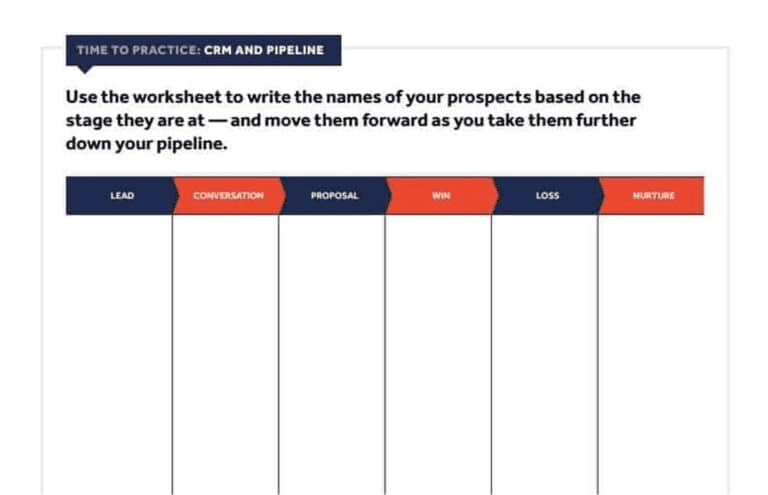
The Five Stages of a Consulting Sales Funnel
Think of your pipeline as a series of clear stages, each with a specific outcome. Prospects enter at the top and move through until they either become a client or exit the funnel entirely. The goal isn't to move everyone forward. It's to move the right people forward, efficiently.
Here are the five stages every consulting pipeline needs.
Stage 1: Lead
A lead is any potential client you've identified and made contact with. This stage is about starting a relationship, not closing a sale.
Your outreach at this stage should focus entirely on the prospect. Identify a specific pain point relevant to their business, reference something specific to them, and ask a question that invites a response, not a pitch that demands a decision.
A manufacturing consultant, for example, might reach out to a mid-sized operations leader noting that similar companies in their sector have been losing 15-20% of throughput to a specific bottleneck issue, and asking whether that's something they're seeing too. That's a conversation starter. It's not a sales email.
The goal here is a response, not a commitment. Getting that first reply is the only conversion that matters at Stage 1.
Stage 2: Conversation
Once you've secured a conversation, your role shifts from initiator to listener. This stage is about understanding the prospect's world: their challenges, priorities, and desired outcomes. Deeply enough to know whether there's a genuine fit.
Spend 80% of the call asking and listening. Questions like "What's the single biggest challenge in this area right now?" and "What would solving that be worth to your organization over the next 12 months?" give you the context you need to shape a relevant proposal and demonstrate that you actually understand their situation.
If there's a clear fit, the conversation ends with a next step you both agree on, not a vague "I'll send something over."
Stage 3: Proposal
Your proposal formalizes what you've heard and presents your approach to addressing it. A strong proposal isn't a menu of services. It's a clear narrative: here's what you told me, here's what I'd do about it, here's what you can expect, and here's what it costs.
Break the engagement into phases with specific deliverables and timelines. Quantify the expected outcome where possible. If the engagement targets a $2M revenue problem, frame your fee against that number, not against your hourly rate. Present on a call whenever possible rather than sending the proposal by email. Consultants in our Clarity Coaching program close significantly higher rates when they walk through proposals live rather than letting them sit in someone's inbox.
This is the decision point. If the prospect accepts, you move into onboarding. If they decline, you ask one question: "Would you be willing to share what factored into the decision?"
That answer is more valuable than most sales training. Pattern recognition across multiple lost proposals (whether you're losing on price, scope, timing, or something else) tells you exactly where your pipeline needs work.
A loss now is rarely a permanent loss. The prospect who wasn't ready in March may be the client who reaches back out in September. How you handle a no determines whether that door stays open.
Stage 5: Nurture
Not every qualified prospect is ready to buy when you first connect. Nurture is the system that keeps you present with those prospects until the timing is right.
This isn't about sending monthly newsletters to a cold list. It's about staying in touch with specific people in specific, valuable ways: sharing a case study relevant to a challenge they mentioned, forwarding a piece of research they'd find useful, or reaching out when something in their market shifts. Lindsey Krazter, a Clarity Coaching client, turned a stalled pipeline into three new clients, including $20K monthly retainer contracts, by systematically improving how she followed up and maintained relationships. The clients were already there. She just built a system to stay with them.
Why Executive Buyers Require a Different Approach
If you're selling to C-suite leaders, VPs, or senior directors, most of the sales and marketing advice you read won't apply. That advice is written for B2C businesses selling to consumers. Selling consulting services to executives is an entirely different game.
Executives are focused on return on investment. They are difficult to reach. And before they invest in working with you, they need to know you, respect your expertise, and have a genuine need that your services address. Mass marketing (bulk email sequences, templated outreach, automation-first funnels) fails here because it signals exactly the opposite of what executives require: personalization, specificity, and demonstrated understanding of their world.
The principle that governs executive selling is value over volume. Each executive you reach out to should feel as though you're speaking directly to their situation.
How to Build a Magnetic Message That Opens Executive Doors
Before your outreach can work, your positioning has to be specific enough to be meaningful. Specialization is what makes your message resonate with the right executives instead of bouncing off everyone's inbox.
The Magnetic Messaging formula we use with Clarity Coaching™ clients is structured around four elements:
I help [who] to [solve what problem] so they can [see what results]. My [reason to choose me].
Every part of this matters. The "who" needs to be specific enough that an executive reading it immediately knows whether it's about them. The "problem" needs to be the problem they're actively losing sleep over, not a generic description of your services. The "results" need to be tangible and relevant to how executives measure success. And the "reason to choose me" should give them a credible, specific reason why you're the right person for this particular problem.
Howard Bryant, a retail and operations consultant working with retailers across Southeast Asia, refined his message to: "I help local and multinational retailers in Southeast Asia increase sales and reduce costs across all categories through retail strategy, consultation, training, and coaching." That specificity (the geography, the client type, the outcomes) made every outreach message immediately relevant to exactly the executives he was targeting. He went on to win a major contract with his dream client.
Direct Outreach That Gets a Response
Once your positioning is clear, you can approach executive outreach with a different structure than most consultants use. The goal of your first message is not to pitch your services. It's to get a reply.
An outreach message that works looks something like this:
Subject: [Something specific to their business]
Hi [Name], congratulations on [specific recent development at their company]. A priority for many of the [executive titles] I work with is [specific challenge]. I've put together some data on this that I thought you'd find valuable given what's happening in [their industry]. [Link or attached brief.] Would be curious to hear your perspective on it.
Notice what's absent: there's no pitch, no service description, and no ask to buy anything. The message is entirely about providing value to them. Getting a reply from a senior executive means you've opened a door. Everything else comes after that.
The Meaningful Conversation That Closes
When you do get an executive on a call, resist the instinct to pitch early. The first 80% of that conversation should be driven by their answers, not your agenda.
Questions that open up valuable executive conversations include "What's your top priority for this business unit in the next 12 months?", "What's the biggest obstacle between where you are now and where you need to be?", and "If this problem isn't solved in the next six months, what's the cost of that to the organization?"
These questions serve two purposes. First, they give you the information you need to make a genuinely relevant offer. Second, they demonstrate the caliber of thinking your prospect would get if they hired you. You're not just gathering data — you're showing them what working with you feels like.
Only once you've clearly understood the problem and confirmed your services can address it should you make an offer. Selling to executives is an exercise in listening, reflecting back what you've heard, and then offering exactly that. When done well, it doesn't feel like selling at all.
Optimizing Your Pipeline Over Time
Structure alone isn't enough. A pipeline only improves when you review it consistently and act on what it tells you.
Two practices make a significant difference.
First, use a CRM. It doesn't need to be expensive or complex. What matters is that you configure it around your five stages, update it in real time, and treat it as a pipeline tool rather than an address book. We cover the best CRMs for consultants in a separate guide if you need a recommendation.
Second, review your pipeline weekly. A 20-minute review every Friday is enough. The question to ask at each stage: what's moving and what's stuck? If proposals aren't converting, your conversation quality or proposal structure needs work. If conversations aren't progressing to proposals, something is going wrong in your discovery calls. If leads aren't converting to conversations, your outreach message or targeting is off.
This kind of diagnostic thinking turns your pipeline from a passive list into an active system you can improve.
Build a Pipeline That Fills Itself With the Right Clients
A structured sales funnel and a disciplined approach to executive selling don't just help you close more business — they help you close better business. When your positioning is sharp, your outreach is targeted, and your conversations are driven by genuine curiosity about the prospect's situation, the clients you attract are already predisposed to work with you at the fees your expertise warrants.
Erik Henry increased his per-engagement fees from $30K to $90K by clarifying exactly who he served and tightening how he communicated his value in those first conversations. Phil Risher built a $1.1M practice using the same foundational approach — clear ideal client, magnetic message, meaningful pipeline management.
Your consulting fees and your pipeline are more connected than most consultants realize. When the wrong prospects enter your funnel, everything downstream gets harder. When the right ones do, conversations are shorter, proposals are easier to write, and closing rates improve.
In our Clarity Coaching program, we work with you directly to build the pipeline, messaging, and executive selling skills that make this happen consistently.
What is a consulting sales funnel and why does it matter?
A consulting sales funnel is a structured pipeline that tracks every prospect through five stages: Lead, Conversation, Proposal, Win/Loss, and Nurture. Without it, most consultants manage their pipeline reactively and can't identify where deals stall. With it, you can diagnose exactly where your process breaks down and focus your effort on the stage that needs the most improvement.
Apply to Join Clarity Coaching™
The Coaching Program & Mastermind Community for Ambitious 6 & 7 Figure Consulting Business Founders.
Your application and initial growth session are free.
Why doesn't standard B2C marketing work for selling consulting services to executives?
Executives are focused on ROI, are difficult to reach, and require genuine trust before committing to a high-value engagement. Mass marketing and automated sequences signal a lack of personalization, the opposite of what earns executive attention. Selling to executives requires targeted outreach, specific positioning, and conversations built around their problems rather than your pitch.
How do I get executive prospects to respond to my outreach?
Lead with value, not a pitch. A first message should reference something specific to their business, share something genuinely useful, and ask a question that invites a response. The goal is a reply, not a sale. Once they respond, you have a conversation. Once you have a conversation, you have an opportunity to understand their situation and propose a solution.
How often should I review my consulting pipeline?
Weekly. A 20-minute review at the end of each week is enough to identify which stages are healthy and which are stuck. Consistent weekly reviews turn pipeline management from a reactive task into a proactive growth system, giving you clear priorities for your business development activities each week.
This website uses cookies to ensure you get the best experience on our site. Learn moreHide
Privacy & Cookies Policy
Privacy Overview
This website uses cookies to improve your experience while you navigate through the website. Out of these cookies, the cookies that are categorized as necessary are stored on your browser as they are essential for the working of basic functionalities of the website. We also use third-party cookies that help us analyze and understand how you use this website. These cookies will be stored in your browser only with your consent. You also have the option to opt-out of these cookies. But opting out of some of these cookies may have an effect on your browsing experience.
Necessary cookies are absolutely essential for the website to function properly. This category only includes cookies that ensures basic functionalities and security features of the website. These cookies do not store any personal information.
Any cookies that may not be particularly necessary for the website to function and is used specifically to collect user personal data via analytics, ads, other embedded contents are termed as non-necessary cookies. It is mandatory to procure user consent prior to running these cookies on your website.