This comprehensive guide explores how consultants can craft clear, compelling value propositions that attract ideal clients and differentiate themselves in the market. It introduces the “Magnetic Messaging” formula, offers real-world examples, and explains the importance of specificity, measurable results, and ongoing refinement. The post also shows how to leverage AI, avoid common mistakes, and use your value proposition as the foundation for confident marketing, premium pricing, and sustainable business growth — all supported by actionable steps and case studies.
Your value proposition isn’t just another marketing buzzword — it’s the difference between blending into the noise and commanding attention from your ideal clients.
Think about it. When a potential client lands on your website, reads your LinkedIn profile, or meets you at a networking event, they’re asking themselves one critical question: “Why should I care about what this person does?”
Your value proposition answers that question in seconds. It’s your consulting firm’s first impression, your competitive edge distilled into a single, compelling statement.
Yet here’s what I see when I coach consultants: brilliant professionals who can transform businesses struggle to articulate their own value clearly. They know what they do, but they can’t explain why it matters to the people who need it most.
If that sounds familiar, you’re not alone. And you’re about to fix it.
Table of Contents
What Is a Value Proposition
Some people call it a USP or unique selling proposition. I like “value proposition” as it applies to much than just sales, although they are technically the same.
A value proposition is a clear statement that explains who you work with, what problem you solve for them, and the specific results you create. It’s not a guarantee or a contract — it’s a marketing message designed to make your ideal clients think, “How do they do that? I need to know more.”
Here’s where most consultants go wrong: they focus on what they do instead of what their clients get. Take these common examples:
“I help companies improve their operations”
“I provide strategic consulting services”
“I offer business transformation solutions”
These statements tell you nothing about the value. They’re generic, forgettable, and interchangeable with thousands of other consultants. Compare those to this:
“I help SaaS companies build a high-performance marketing system to drive top-line revenue growth and enterprise value.”
See the difference? The second example is specific, results-focused, and immediately relevant to a defined audience.
The Magnetic Messaging Formula That Works
Inside our Clarity Coaching Framework, we teach something called Magnetic Messaging — our version of the value proposition specifically designed for consultants. Here’s the formula and a breakdown of each component:
I help [WHO] to [solve WHAT problem] so they can [see WHAT results]. My [WHY choose me]…
WHO: This is your ideal client. The more specific you are, the better your proposition will be. Instead of “companies,” think “SaaS companies with $5-50M in ARR” or “manufacturing firms with 100-500 employees.”
WHAT (Problem): This is the specific challenge that your clients face. Don’t use vague words like “inefficiencies.” Say “outdated inventory management systems that tie up 40% of working capital.”
WHAT (Result): This is the outcome your clients achieve with your help. Be specific and measurable when possible, as specificity increases the perception of value. “Increase revenue by 25%” beats “improve performance.”
WHY: This is your differentiator — what makes you the obvious choice. It could be your methodology, experience, guarantee, or unique approach.
The Magnetic Messaging formula works because it answers every question a prospect has before they’ll consider working with you. When done right, it attracts potential clients like a magnet — hence the name.
“When your message resonates inside the community, it lands even better in the market. Clarity becomes the compass that guides every decision you make.”
8 Powerful Value Proposition Examples
Let’s examine real value propositions from successful consulting firms and break down exactly why they’re so effective at attracting ideal clients:
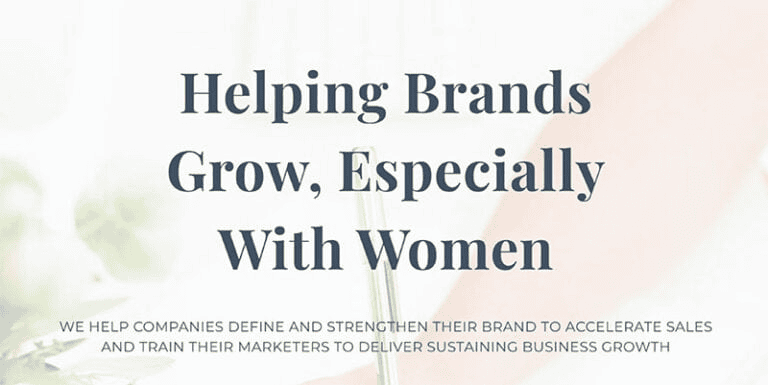
Value Proposition: “Helping Brands Grow With Women: We help CPG brands sell more effectively to women and achieve a 300% ROI by positioning your brand to appeal to women.”
Why It Works: Women drive 70-80% of consumer purchasing decisions, making this incredibly relevant to CPG brands. Amanda Hill tied together market data, client needs, and measurable results into one compelling statement.
As Amanda explains: “When you understand your consumer, you develop choices to win with them. In a smaller company, you have less resources so you have even more choices. You have to do the opposite of trying to be all things to all people.”
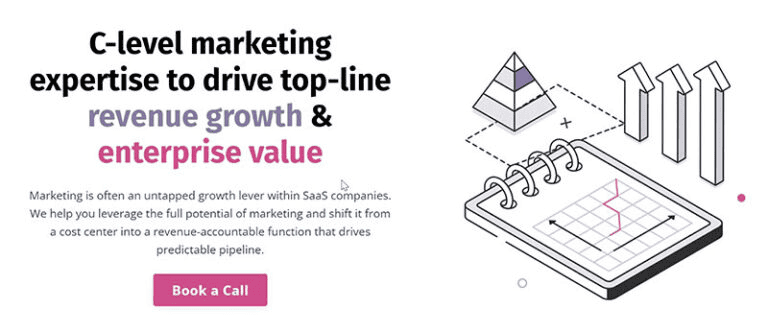
Value Proposition: “Build an automated demand generation engine: We help SaaS companies build a high-performance marketing system to drive top-line revenue growth and enterprise value.”
Why It Works: This speaks directly to what SaaS companies want most — growth and eventual exit value. The specificity around “automated demand generation” and “high-performance marketing system” shows deep industry knowledge.
Shiv Narayanan, the founder, puts it this way: “It comes down to building a differentiated position. By starting there, we set ourselves up for success. You don’t want to compete on price. You want to compete on value.”
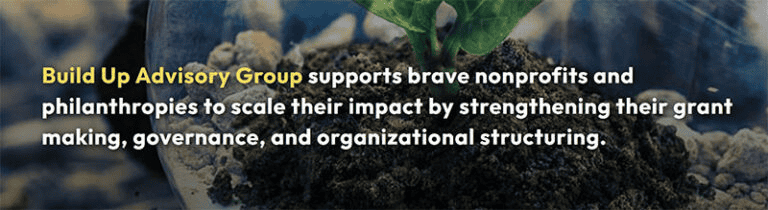
Value Proposition: “We help brave philanthropies and nonprofits scale their impact by strengthening their grant making and organizational structuring.”
Why It Works: The word “brave” immediately connects with nonprofits that see themselves as change-makers. The focus on “scaling impact” speaks to their mission, while “strengthening grant making” addresses a critical operational need.
A. Nicole Campbell emphasizes the importance of clarity: “You have to be clear on the kinds of nonprofits that you’re working with, because that category is big. Getting clear on what are their needs and what’s the value that you can provide to them will help you clarify which organizations you’ll be able to work with.”
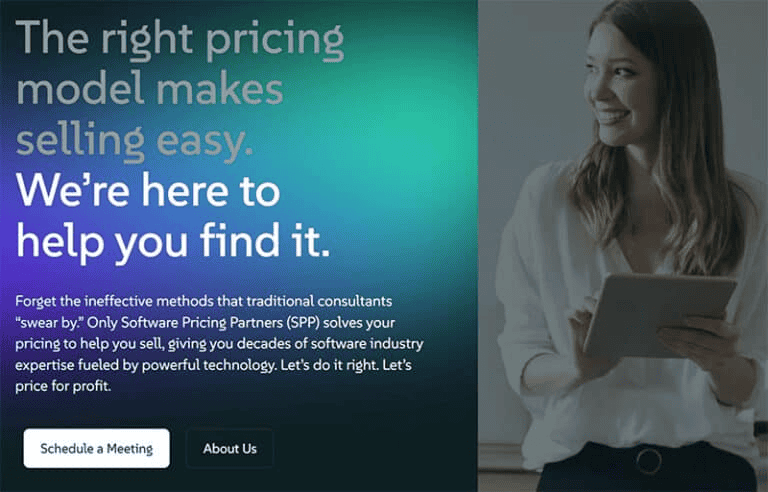
Value Proposition: “Software Pricing Partners helps you develop innovative pricing strategies that delight customers and derange competitors while minimizing risk at every stage of the pricing process.”
Why It Works: Pricing software is notoriously difficult, and this proposition acknowledges that challenge while promising both competitive advantage and risk mitigation. The firm name itself reinforces the specialization.
Chris Mele explains their focus: “We don’t try to do everything. We beat all of the name-brand firms because of that singular focus. When you peg that stake in the ground, your message is light years ahead of the watered-down competitors.”
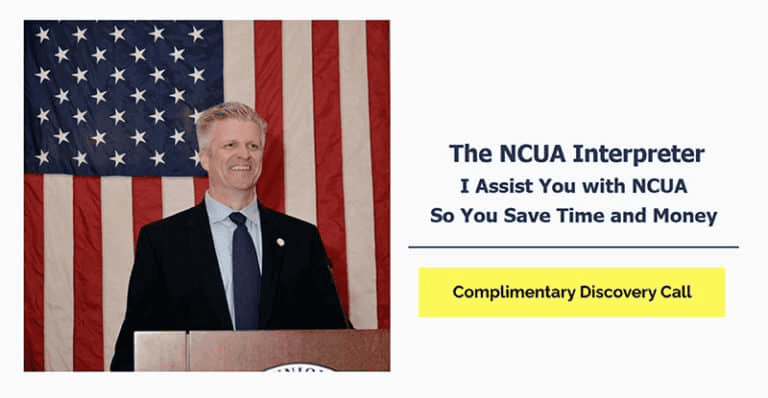
Value Proposition: “Helping credit union CEOs achieve the best possible examination results so they save time and money.”
Why It Works: This is beautifully simple and specific. Credit union CEOs know exactly what examinations are, why they matter, and what “the best possible results” means in their context.
Mark’s approach to testing his message: “I started communicating with some emails and posts on LinkedIn. Immediately, I started getting conversations. Once you identify that perfect client, they have to know you exist.”
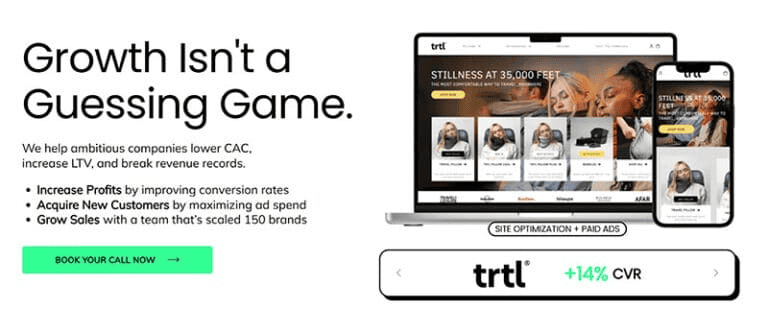
Value Proposition: “Your External Growth Team: We grow sales by running data-driven growth experiments for Shopify, eCommerce, SaaS, & lead-gen companies.”
Why It Works: The positioning as an “external growth team” immediately addresses a common pain point, which is the need for specialized marketing talent without the overhead of hiring. The promise of “data-driven growth experiments” appeals to analytical decision-makers.
Value Proposition: “Focused on helping natural product brands grow. We position them to raise capital, prove their growth hypothesis, build community, and scale.”
Why It Works: The specificity around “natural product brands” creates immediate relevance for a defined market. The four outcomes listed (raise capital, prove growth hypothesis, build community, scale) address the complete growth journey.
Elliot Begoun reflects on developing this focus: “Once I narrowed that down and got concentrated on the things I did well and the things I enjoyed doing the most, that allowed the scale to happen.”
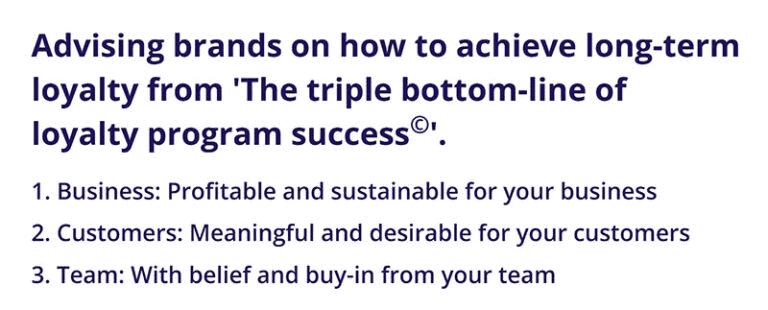
Value Proposition: “Retain the Best, Grow The Rest: The Point of Loyalty is a strategic customer loyalty consultancy dedicated to driving deeper relationships and profitable revenue growth from the abundance of existing customers.”
Why It Works: The tagline “Retain the Best, Grow The Rest” is memorable and encapsulates the entire value proposition. Instead of targeting a specific industry, they focus on a horizontal specialization that applies across sectors.
“I’ve got a process and a strategy built off what I call bespoke research,” explains Adam. “I never positioned myself as an expert. It’s all about being a specialist, and these studies help me learn but also provide insights to the community.”
How AI Can Position Yourself in a Changing Market
As artificial intelligence reshapes the consulting landscape, your value proposition becomes even more critical. Many consultants worry that AI will replace them, but the smart ones are using it as a differentiator. For example:
Enhanced Decision-Making: If you help clients make strategic decisions, your ability to leverage AI for data analysis and scenario modeling becomes a competitive advantage.
Accelerated Insights: Artificial intelligence can help you process information faster and identify patterns your competitors might miss, leading to better recommendations in less time.
Scalable Personalization: AI tools can help you customize your approach for each client while maintaining efficiency across your practice.
The key is positioning AI as an amplifier of your expertise, not a replacement for it. Your value proposition should emphasize how you combine human judgment, industry knowledge, and cutting-edge tools to deliver superior outcomes.
“Positioning drives pricing. Process drives peace. And every consultant deserves a business that supports their life, not one that consumes it.”
How to Create Your Own Magnetic Value Proposition
Now it’s time to craft your own compelling value proposition. Here’s a step-by-step approach that will help you create a message that resonates with your ideal clients and differentiates you from the competition:
Step 1: Get Specific About Your WHO
Start by narrowing your focus. Instead of “I help businesses,” think:
What industry or sector?
What size companies?
What geographic region?
What role does your buyer typically hold?
The more specific you get, the more your message will resonate with your ideal client. As one consultant told me, “When I stopped trying to help everyone, I started helping the right people a lot better.”
Step 2: Identify the Real Problem
Your clients don’t buy consulting services — they buy solutions to problems that keep them up at night. Dig deeper than surface-level issues:
What’s the underlying challenge?
What happens if they don’t solve it?
How much does this problem cost them?
What makes this problem difficult to solve?
Step 3: Define Measurable Results
Vague promises don’t inspire action. Be specific about outcomes. Instead of “Improve efficiency,” try “Reduce operational costs by 20% while improving customer satisfaction scores.” Instead of “Better leadership,” try “Develop leaders who increase team engagement by 40% and reduce turnover by 60%.”
Step 4: Articulate Your Differentiator
This is where most consultants struggle. Your differentiator doesn’t have to be completely unique — it just needs to be ownable and relevant. Consider:
Your unique methodology or framework
Specific industry experience or credentials
Your guarantee or risk-reversal offer
Your delivery approach or timeline
Proprietary tools or assessments
Remember the Schlitz Beer example: all breweries used the same purification process, but only Schlitz talked about it. They went from 5th place to 1st in market share simply by claiming a benefit that was always there.
Step 5: Test and Refine
Here’s the critical part most consultants miss: your value proposition isn’t finished when you write it. It’s finished when it consistently generates the response you want from your ideal clients. As I always tell my clients: “Don’t try to perfect it all by yourself. Get it out there. Take imperfect action.”
Testing Your Value Proposition in the Real World
You can craft the most beautiful value proposition in your office, but it doesn’t matter if it doesn’t resonate with your target market in the real world. Here are three proven ways to test your message:
1. Networking Events
Start using your value proposition when meeting new people at industry events, conferences, and networking gatherings. Pay attention to their reactions and body language, as these immediate responses will tell you everything you need to know about your message’s effectiveness:
Apply to Join Clarity Coaching™
The Coaching Program & Mastermind Community for Ambitious 6 & 7 Figure Consulting Business Founders.
Your application and initial growth session are free.
Do their eyes light up when you explain what you do?
Do they ask follow-up questions?
Do they say “tell me more” or “how does that work?”
Or do they politely nod and change the subject?
I remember attending technology networking events early in my career. Initially, when I explained what we did, people would just say “interesting” and move on. But after refining the message based on feedback, suddenly people were asking, “How do you make that happen? What do you guys do differently?”
That’s the moment you know you’ve hit it.
2. Google Ads Testing
For just a one-time spend of $50-100, you can get invaluable market feedback. Create 2-3 different versions of your value proposition as ad headlines, run them simultaneously, and see which gets the highest click-through rate. The market will tell you which message resonates most.
3. LinkedIn Outreach
Use different versions of your value proposition in your outreach messages and track response rates. The version that generates the most replies and conversations is your winner.
Where and How to Use Your Value Proposition
Once you’ve crafted and tested your magnetic message, deploy it strategically everywhere your ideal clients might encounter you throughout their buyer’s journey:
Website: Your homepage headline, about page, and service descriptions
LinkedIn Profile: Your headline and summary section
Networking: Your elevator pitch at events and conferences
Proposals: The opening section that frames your approach
Speaking Engagements: Your introduction and bio
Business Cards: A shortened version that sparks curiosity
The key is consistency. When prospects encounter your message multiple times across different channels, it reinforces your positioning and builds familiarity.
Common Value Proposition Mistakes to Avoid
After reviewing hundreds of value propositions from consultants across almost every industry and experience level, I’ve seen these same critical mistakes repeatedly. Avoid these common pitfalls to strengthen your message:
Mistake 1: Being Too Generic
“I help companies improve performance” could apply to any consultant in any industry. Specificity is your friend.
Mistake 2: Focusing on Features Instead of Benefits
Clients don’t care about your methodology — they care about the results it produces. Lead with outcomes, not processes.
Mistake 3: Using Jargon
If your ideal client wouldn’t use those words, neither should you. Speak their language, not consultant-speak.
Mistake 4: Making Unbelievable Claims
“I guarantee to double your revenue in 30 days” might get attention, but it destroys credibility. Make bold promises you can actually keep.
Mistake 5: Trying to Appeal to Everyone
The more people you try to serve, the less compelling your message becomes to any specific group. It dilutes it rather than strengthens it. As the adage goes, aim to help everybody and you will end up helping nobody.
“You’re not surviving your business anymore, you’re designing it. This isn’t about doing more — it’s about doing the right things with intention and ease.”
The Power of Specificity: Why Narrow Beats Broad
One of the biggest fears consultants have when developing their value proposition is that being specific will limit their opportunities. They worry that focusing on manufacturing companies means they can’t work with technology firms, or that specializing in pricing strategy means they can’t help with operations.
This fear is understandable but misguided. Specificity doesn’t limit you. It liberates you. When you’re known for something specific, several things happen:
You cut through the noise: In a crowded marketplace, the specific message stands out while the generic one gets ignored.
You reduce competition: There might be thousands of “business consultants,” but only a handful specialize in your exact area.
You can charge premium prices: Specialists always command significantly higher fees than generalists in every consulting market.
You attract better referrals: People know exactly when to refer you, leading to higher-quality opportunities.
You become the obvious choice: When someone has the exact problem you solve, you’re not compared against everyone — you’re the clear solution.
As our Clarity Coaching™ member Elliot Begoun from TIG Brands put it: “Many consultancies help brands with growth. But not many consultancies help natural product brands with growth. That’s the power of specificity.”
Building Your Value Proposition: Long and Short Form
I recommend consultants develop their value proposition in two formats to maximize their effectiveness across different marketing and sales contexts. This dual approach ensures you have the right message length for every situation:
The Long Form (For Marketing Materials)
The long form version of your value proposition is a paragraph or more that fully explains it. You’ll use this on your website, in proposals, and in marketing materials where you have space to elaborate. Here’s an example:
“We help SaaS companies with $5-50M in annual recurring revenue build high-performance marketing systems that drive predictable growth. Using our proven 90-day framework, we’ve helped over 125 companies generate more than $247M in tracked revenue growth. Unlike general marketing agencies, we specialize exclusively in B2B SaaS growth strategies, ensuring every dollar you invest directly impacts your enterprise value and exit potential.”
The Short Form (For Conversations)
This is your elevator pitch — one or two sentences maximum that you can deliver naturally in conversation. Here’s an example:
“We help mid-market SaaS companies build marketing systems that drive predictable revenue growth. We’ve helped our clients generate over $247M in tracked results using our proven 90-day framework.”
Both versions contain the same core elements but are tailored for different contexts and audience attention spans. The long form allows you to build credibility and provide compelling details when you have someone’s full attention, while the short form ensures you can deliver maximum impact in brief encounters.
Having both versions ready means you’ll never fumble for words or miss an opportunity to make a strong impression, regardless of the situation.
The Iterative Process: Refining Over Time
Your value proposition isn’t a “set it and forget it” element of your business. It should evolve as you gain experience, develop new capabilities, and better understand your market. I’ve seen consultants go through several iterations:
Version 1: “I help companies with their marketing strategy”
Version 2: “I help technology companies improve their marketing results”
Version 3: “I help B2B SaaS companies build predictable revenue growth through data-driven marketing systems”
Each version gets more specific and compelling. The key is to keep testing and refining based on market feedback. Some consultants worry that changing their value proposition will confuse their market, but the opposite is true. As you get clearer on your value, your market gets clearer on when to hire you.
Real-World Application: From Message to Meetings
Let me share how one consultant used her refined value proposition to transform her business. When she first came to us, Sarah was a generic “business consultant” struggling to differentiate herself. After working through the Magnetic Messaging framework, she developed this value proposition:
“I help manufacturing companies with 100-500 employees reduce operational waste by 25% while improving safety scores, using lean methodologies that don’t disrupt production.”
Within 90 days of implementing this message:
Her website conversion rate doubled
Her LinkedIn connection requests increased by 300%
She landed three new clients at 40% higher fees
Referrals started coming in from specific sources
The difference? She went from being a consultant looking for problems to solve to being the obvious solution for a specific, valuable problem.
The Technology Factor: Staying Relevant in an AI World
As AI and automation reshape industries, consultants must consider how technology affects their value proposition. This isn’t about fearing replacement. It’s about positioning yourself strategically. Smart consultants are incorporating technology advantages into their value propositions:
Data-Driven Insights: “Using advanced analytics and AI-powered tools, we identify operational inefficiencies that traditional audits miss.”
Accelerated Results: “Our AI-enhanced methodology delivers strategic recommendations in half the time of conventional approaches.”
Predictive Capabilities: “We combine 20 years of industry experience with machine learning models to predict market shifts before they happen.”
The key is positioning technology as an enhancer of your expertise, not a replacement for it. Clients still need human judgment, industry knowledge, and strategic thinking. They just want it delivered faster and with better data support.
Measuring the Impact: How to Know It’s Working
A great value proposition should be measurable in its impact on your business performance and growth trajectory. Here are the key metrics to track that will show you whether your message is truly working:
Response Rates: Are more people responding to your outreach?
Website Engagement: Are visitors spending more time or visiting more pages?
Qualified Leads: Are you attracting better-fit prospects?
Conversion Rates: Are more prospects becoming clients?
Fee Levels: Are you able to command higher prices?
Referral Quality: Are referrals more targeted and relevant?
If your value proposition is working effectively and resonating with your target market, you should see measurable improvement across these metrics within 60-90 days of consistent implementation and deployment.
The Compound Effect of Clarity
Here’s what happens when you nail your value proposition and it becomes the foundation of everything you do in your consulting business. The transformation goes far beyond just having better marketing copy:
Confidence: You speak with authority about your value because you’re crystal clear on what you deliver and why it matters to your clients.
Consistency: Your message is the same whether you’re networking, writing proposals, or updating your website.
Compound Growth: Clear positioning leads to better clients, higher fees, and more referrals, which accelerates growth.
As one of our Clarity Coaching clients told me: “Once I got clear on my value proposition, everything else fell into place. My marketing became easier, my sales conversations became more natural, and my confidence went through the roof.”
This isn’t just about having a better marketing message. It’s about building a business that reflects your expertise and serves the clients who need you most.
Taking Imperfect Action: Your Next Steps
We’ve already talked about mistakes consultants make. But the biggest one is trying to perfect your value proposition before testing it. The market will teach you what works better than any amount of internal deliberation. Here’s your action plan:
Draft Your First Version: Use the Magnetic Messaging formula to create your initial value proposition, focusing on clarity over perfection.
Test It Immediately: Start using it in conversations, on your LinkedIn profile, and in your email signature across all touchpoints.
Gather Feedback: Pay attention to how people respond and what specific questions they ask about your services.
Refine and Repeat: Make strategic adjustments based on real-world feedback and test the updated version again consistently.
Document What Works: Once you find the version that consistently generates positive responses, formalize it across all your marketing materials.
Remember, you’re not looking for perfection. You’re looking for effectiveness. The goal is to create more conversations with your ideal clients, and you can only do that by getting your message in front of them.
Your Value Proposition Is Your Foundation
Everything else in your consulting business — e.g., your marketing, sales process, pricing, service delivery, etc. — builds on the foundation of your value proposition. When that foundation is solid, everything else becomes easier and more effective.
You stop competing on price because you’re solving specific problems for specific people. You stop chasing every opportunity because you’re clear on your ideal client. You stop struggling to explain your value because your message is magnetic.
Ultimately, the consultants who thrive aren’t necessarily the smartest or the most experienced. They’re the ones who can clearly communicate their value to the people who need it most. That’s the key.
Your expertise is already there. Your experience is already there. Now it’s time to package them in a way that makes your ideal clients say, “I need to work with this person.” That’s how you transform from someone who does consulting work to someone who leads a consulting business.
Ready to develop your own magnetic value proposition and build a consulting business that reflects your expertise?
At Consulting Success®, we’ve helped over 1,000 consultants across 75+ countries develop clear positioning, confident pricing, and the control that comes from building a business the right way.
Through our Clarity Coaching™ program, you’ll work with coaches who have built successful consulting businesses themselves, use proven frameworks designed specifically for consultants, and join a community of peers who challenge you to play bigger. This is where consultants stop surviving their business and start designing it. Go ahead and schedule your free Clarity Coaching™ growth call.
FAQ About This Article
1. What’s the difference between a value proposition and a unique selling proposition?
While these terms are often used interchangeably, there’s a subtle difference. A value proposition focuses on the value and results you create for clients, while a USP emphasizes what makes you unique from competitors. Our Magnetic Messaging formula combines both by including the “why choose me” element, making it more comprehensive than traditional USPs.
2. Won’t being too specific in my value proposition limit my opportunities?
This is the most common fear consultants have, but it’s actually the opposite. Specificity doesn’t limit you; it liberates you. When you’re known for solving a specific problem for specific people, you cut through the noise, reduce competition, and can charge premium prices. You become the obvious choice rather than one of many options.
3. How long should my value proposition be?
You need two versions: a short form (1-2 sentences) for conversations and networking, and a long form (1-2 paragraphs) for your website and marketing materials. The short version covers the essentials quickly, while the long version provides the detail needed to build credibility and trust.
4. How do I know if my value proposition is working?
Track measurable metrics like response rates to outreach, website engagement, qualified leads, conversion rates, and referral quality. If your value proposition is effective, you should see improvement across these areas within 60-90 days of consistent implementation.
Apply to Join Clarity Coaching™
The Coaching Program & Mastermind Community for Ambitious 6 & 7 Figure Consulting Business Founders.
Your application and initial growth session are free.
5. Should I include AI or technology in my value proposition?
Yes, but only if it genuinely enhances the value you deliver to clients. AI should be positioned as an amplifier of your expertise, not the main attraction (unless you’re specifically an “AI consultant”). Focus on outcomes like “data-driven insights” or “accelerated results” rather than the technology itself.
6. Can I change my value proposition once I’ve established it?
Absolutely. Your value proposition should evolve as you gain experience and better understand your market. Many successful consultants go through several iterations, getting more specific and compelling over time. The key is testing each version with real prospects before making changes across all your materials.
This website uses cookies to ensure you get the best experience on our site. Learn moreHide
Privacy & Cookies Policy
Privacy Overview
This website uses cookies to improve your experience while you navigate through the website. Out of these cookies, the cookies that are categorized as necessary are stored on your browser as they are essential for the working of basic functionalities of the website. We also use third-party cookies that help us analyze and understand how you use this website. These cookies will be stored in your browser only with your consent. You also have the option to opt-out of these cookies. But opting out of some of these cookies may have an effect on your browsing experience.
Necessary cookies are absolutely essential for the website to function properly. This category only includes cookies that ensures basic functionalities and security features of the website. These cookies do not store any personal information.
Any cookies that may not be particularly necessary for the website to function and is used specifically to collect user personal data via analytics, ads, other embedded contents are termed as non-necessary cookies. It is mandatory to procure user consent prior to running these cookies on your website.